Business challenge
Organizations need accurate attendance records, live device status and reports without manual register handling.

IoT Solution · Automation
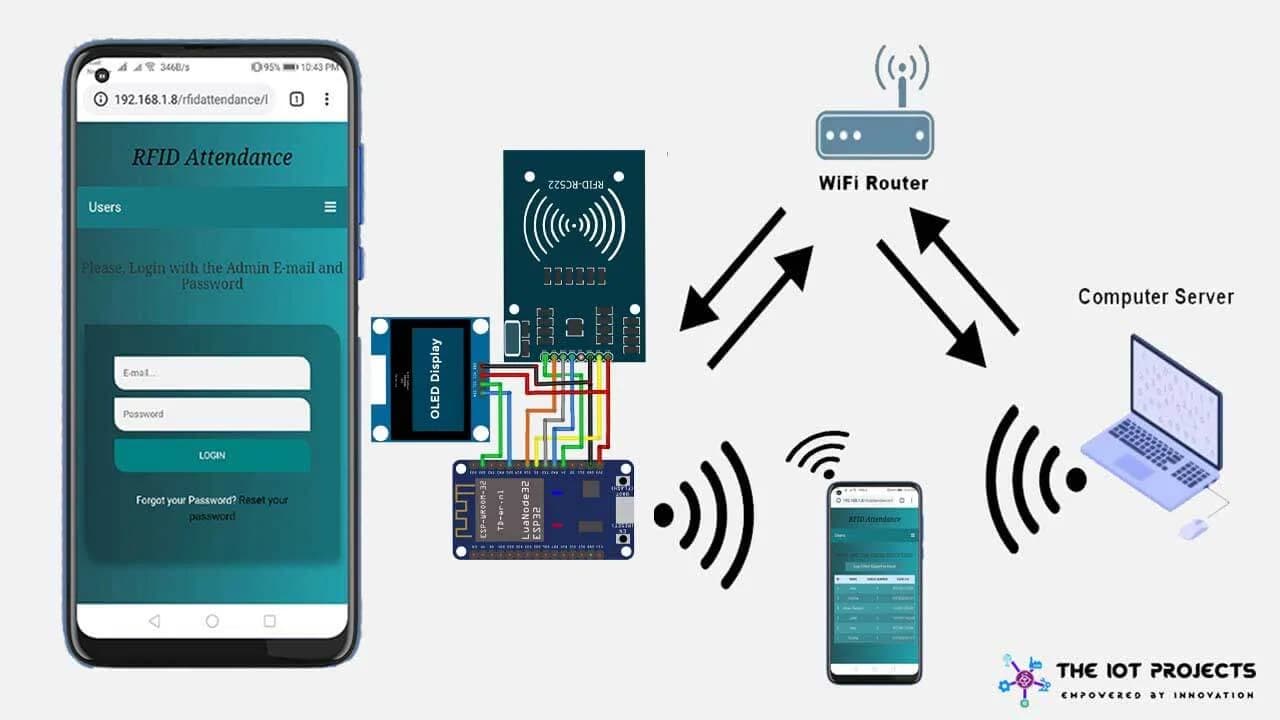
An IoT attendance system concept with RFID scans, device status, attendance records, alerts and admin reporting.
Industry
Automation
Product type
IoT Solution
Technologies
5 tools
Modules
6 key modules
Product understanding
This concept shows how RFID and IoT-based attendance can be managed through a live dashboard and reporting panel.
Organizations need accurate attendance records, live device status and reports without manual register handling.
The product includes RFID scan records, device health dashboard, alerts, attendance reports and admin controls.
The system creates a clear foundation for real-time attendance tracking and reporting.
Application modules
Device dashboard
RFID scan records
Attendance reports
Alert settings
User mapping
Admin controls
Technology stack
How users move through the complete product journey.
How frontend screens connect with APIs and stored data.
How authentication, roles and business rules affect architecture.
How the project could scale when features or users increase.
Delivery workflow
Product development becomes easier to understand when each implementation stage has a clear purpose.
IoT workflow discovery
Device data planning
Dashboard UI design
Report planning
Frontend build
Hardware/API integration roadmap
Turn project understanding into development skill
Project FAQs
Understand how software projects support practical skills, portfolio development and technical interview preparation.
Start with the users, business problem, main screens and modules. Then map the data, API requirements, authentication rules and technology stack before implementation.
Yes. The same product idea can often be implemented with different technologies. The important part is choosing a stack that supports the required workflows and that you can explain confidently.
A project can be useful in a portfolio when you have personally implemented or meaningfully contributed to it and can clearly explain its architecture, features, challenges and outcomes.
Be prepared to explain the problem, user flow, modules, database structure, API flow, authentication, major technical decisions and what you would improve in a future version.