Web Development
How to Become a Full-Stack Developer in 2027: A Complete Beginner’s Roadmap
Start your software development journey with the right skills, practical projects and a clear learning roadmap designed for beginners and aspiring IT professionals.
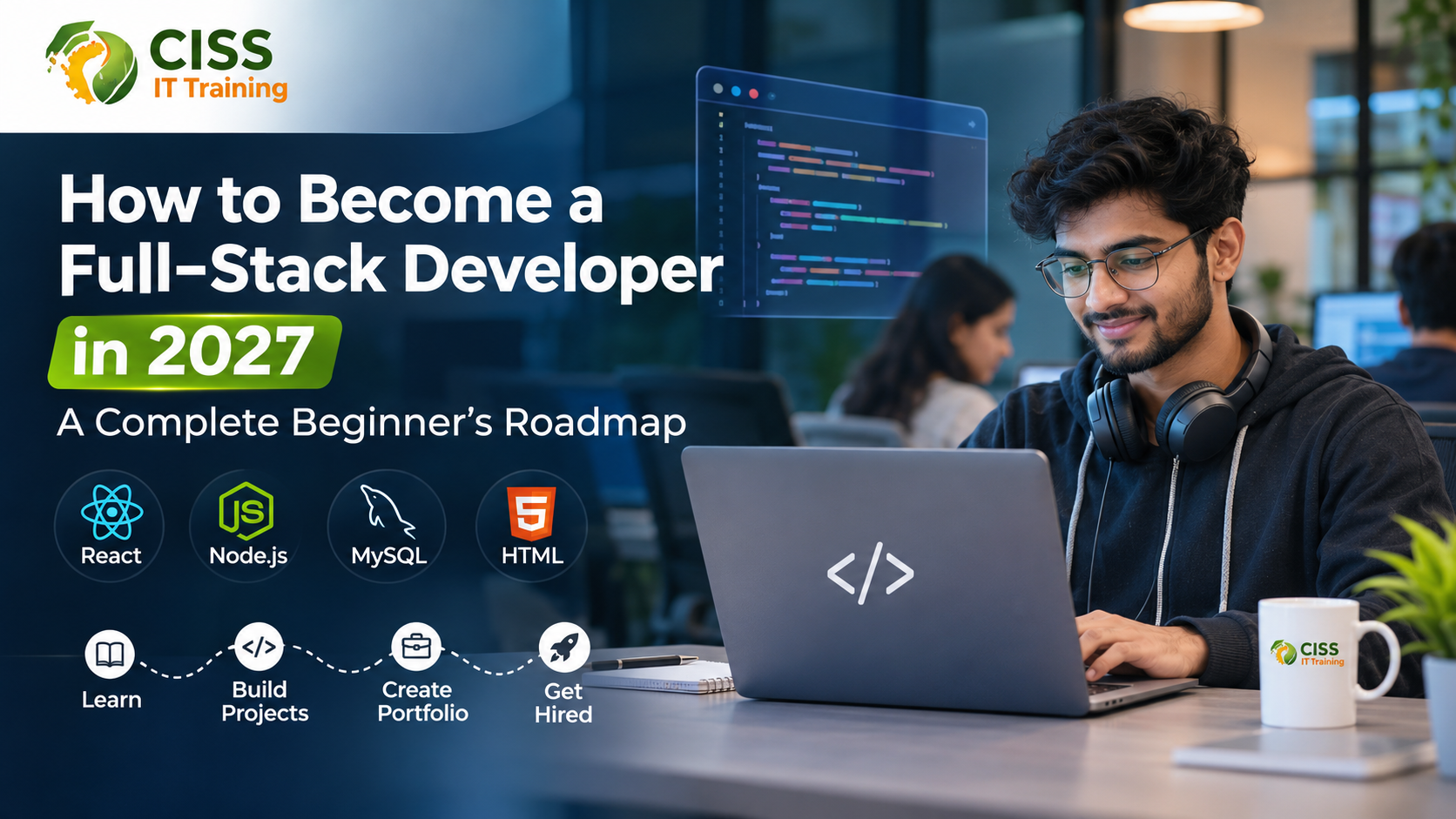
Learn how to become a full-stack developer in 2027 with a step-by-step roadmap covering frontend, backend, databases, practical projects and career preparation.
01
What Is Full-Stack Development?
Full-stack development is the process of building both the frontend and backend of a web application. A full-stack developer works with user interfaces, server-side logic, databases and APIs to create complete, functional applications.
It is a valuable career path for students who want to understand how modern software applications are built from start to finish.
## Step 1: Learn Frontend Development
Start by learning HTML, CSS and JavaScript. These technologies form the foundation of modern web development.
Once you understand the basics, explore React.js to build interactive, responsive and user-friendly applications. Practice creating websites, dashboards and reusable components.
## Step 2: Master Backend Development
Backend development focuses on the server-side functionality of an application.
Learn Node.js and Express.js to create REST APIs, manage authentication, process user requests and connect applications with databases. Understanding security and error handling is also important.
## Step 3: Understand Databases
Databases help applications store, manage and retrieve information.
Start with MySQL to understand relational databases, tables and SQL queries. You can also explore MongoDB to learn how document-based databases work.
## Step 4: Build Real-World Projects
Practical experience is essential for becoming a confident developer. Instead of only watching tutorials, build applications that solve real-world problems.
You can start with an e-commerce website, expense tracker, student management system or task management application.
Use Git and GitHub to manage your source code and create a professional project portfolio.
## Step 5: Prepare for Your IT Career
Create a professional resume, improve your problem-solving skills and practice technical interview questions.
Learn the basics of deployment, application testing and software development workflows. A strong portfolio can help you demonstrate your practical knowledge to potential employers.
## Start Your Learning Journey with CISS IT Training
If you are looking for IT training in Indore, explore CISS IT Training and discover learning opportunities aligned with your career goals.
Take the first step towards becoming a confident software developer by developing technical skills and gaining hands-on experience.
Visit www.cissittraining.com to explore training opportunities.
Related topics